Categories
Blog Life & Nature Social

🧭 15 Unknown Places in India (Bharat) That Will Take Your Breath Away

Discover the soul of India through its quietest, most underrated gems.

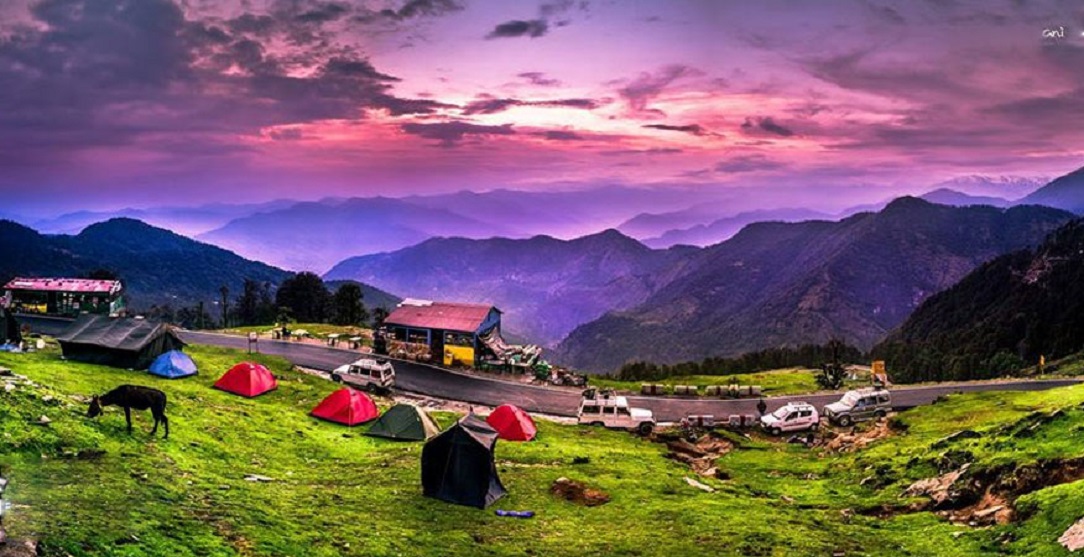
🌲 1. Chopta – Mini Switzerland of India, Uttarakhand

A pristine hamlet in the Garhwal Himalayas, Chopta is surrounded by deodar forests and is the base for the world’s highest Shiva temple at Tungnath.

Fun Fact: Chandrashila peak offers a view of Himalayan peaks including Nanda Devi and Trishul.

📍 How to Reach:

  • Nearest Airport: Jolly Grant Airport, Dehradun (~225 km)
  • Railhead: Haridwar (~210 km)
  • By Road: Cabs from Rishikesh or Rudraprayag; winter months may need 4×4.

✅ What to Do Next:

  • Trek to Tungnath & Chandrashila
  • Camp at Deoria Tal
  • Birdwatching in Kedarnath Wildlife Sanctuary

🔒 Safety:

  • Safe to travel year-round with proper gear
  • Solo travelers welcome, but avoid night treks
  • Signal loss is common; inform someone before trek

🎒 Must-Carry:

  • Warm clothes, trekking shoes
  • Water bottle, snacks, offline maps
  • Torchlight, power bank

🏞️ 2. Ziro Valley – The Tribal Paradise, Arunachal Pradesh

A sustainable farming model, folk culture, and pine-clad hills make Ziro a timeless retreat.

Cultural Insight: Apatani women once tattooed faces to deter tribal raids—now a fading tradition.

📍 How to Reach:

  • Airport: Lilabari, Assam (~100 km)
  • Railhead: Naharlagun (~90 km)
  • Permit: ILP (Inner Line Permit) required for Indian citizens

✅ What to Do Next:

  • Explore Hong Village
  • Visit Talley Valley Sanctuary
  • Attend Ziro Music Festival

🔒 Safety:

  • Very safe, peaceful tribal communities
  • Roads may be rough; keep buffer time
  • Monsoon landslides possible (June–August)

🎒 Must-Carry:

  • ILP, mosquito repellent
  • Rain gear, comfortable shoes
  • Local SIM (Airtel, Jio work best)

🐪 3. Guda Bishnoi Village – Eco Guardians, Rajasthan

This desert village is a lesson in environmental conservation, led by the Bishnoi tribe.

Did You Know? Bishnois sacrificed lives in 1730 to save trees—centuries before modern movements.

📍 How to Reach:

  • Airport & Railhead: Jodhpur (~25 km)
  • By Road: Auto, taxi, or pre-arranged eco tour

✅ What to Do Next:

  • Jeep safari to spot blackbucks
  • Try pottery, weaving workshops
  • Watch sunset at Guda Lake

🔒 Safety:

  • Extremely safe; friendly villagers
  • Day trips recommended
  • Follow eco-tourism guidelines

🎒 Must-Carry:

  • Sunglasses, hat, sunscreen
  • Camera, binoculars
  • Water and local guide contact

🏔️ 4. Phawngpui – Blue Mountain, Mizoram

This sacred hill in Mizoram offers cloud forests and rare Himalayan species.

Myth: Locals believe it’s home to mountain spirits; offerings are still made.

📍 How to Reach:

  • Airport: Lengpui, Aizawl (~300 km)
  • By Road: Jeep/taxi from Aizawl

✅ What to Do Next:

  • Trek to Thaltlang village
  • Camp at Phawngpui National Park
  • Birdwatch rare butterflies & hornbills

🔒 Safety:

  • Safe with guide, but fog can reduce visibility
  • Always trek during daylight
  • Solo travel not advised off-trail

🎒 Must-Carry:

  • Trekking permits, raincoat
  • Compass, food, emergency whistle
  • Torch, insect spray

🏞️ 5. Gandikota – Grand Canyon of India, Andhra Pradesh

A gorge carved by the Pennar River, surrounded by red rock and history.

Trivia: Gandikota Fort once housed a thriving market during the Vijayanagar empire.

📍 How to Reach:

  • Railhead: Jammalamadugu (~18 km)
  • By Road: 4–5 hrs from Bengaluru or Tirupati

✅ What to Do Next:

  • Explore Gandikota Fort
  • Kayak in the Pennar River
  • Camp under the stars

🔒 Safety:

  • Camping safe but isolated; group trips better
  • Fort walls can be steep; no rails

🎒 Must-Carry:

  • Sunscreen, first-aid kit
  • Tent & torch if camping
  • Cash (no ATMs nearby)

🌿 6. Agumbe – Cherrapunji of South India

The king cobra’s rainforest home with unforgettable sunsets.

Film Note: Many scenes from Malgudi Days were shot here.

📍 How to Reach:

  • Airport: Mangalore (~100 km)
  • By Road: Buses/taxis from Udupi or Shivamogga

✅ What to Do Next:

  • Visit Barkana & Onake Abbi Falls
  • Sunset Point for views
  • Agumbe Rainforest Research Station

🔒 Safety:

  • Safe in dry season (Oct–March)
  • Avoid night treks; cobra sightings common

🎒 Must-Carry:

  • Poncho, anti-leech socks
  • Trekking shoes, whistle
  • Camera with rain protection

🌿 7. Majuli Island – World’s Largest River Island, Assam

A serene, spiritual, and ecologically significant river island on the Brahmaputra. Home to Neo-Vaishnavite culture.

Cultural Insight: More than 20 Satras (monasteries) still practice ancient dance-drama arts like Sattriya.

📍 How to Reach:

  • Airport: Jorhat (~20 km to ferry point)
  • By Road + Ferry: From Jorhat to Nimati Ghat, then 1-hour ferry to Majuli

✅ What to Do Next:

  • Visit Auniati & Kamalabari Satra
  • Watch mask-making at Samaguri
  • Cycle through paddy fields

🔒 Safety:

  • Extremely safe; peaceful environment
  • Limited ATMs; carry cash
  • Seasonal flooding (July–Aug) may affect plans

🏹 Must-Carry:

  • Sunhat, shades, raincoat
  • Insect repellent, torch, ID proof

⛺️ 8. Tawang – The Land of Monasteries, Arunachal Pradesh

A high-altitude town with Buddhist spiritual energy, waterfalls, and Indo-China history.

Did You Know? Tawang Monastery is the 2nd largest in the world after Lhasa.

📍 How to Reach:

  • Airport: Tezpur or Guwahati (long drive after)
  • By Road: From Guwahati via Bomdila (~14 hrs)

✅ What to Do Next:

  • Visit Tawang Monastery & War Memorial
  • Day trip to Sela Pass & Madhuri Lake

🔒 Safety:

  • Road safety depends on weather; avoid peak winter
  • Permit (ILP) required
  • Military zone; follow rules strictly

🏹 Must-Carry:

  • Warm thermals, snow boots
  • Oxygen can (optional), medicine

🏜️ 9. Patan – The Hidden Heritage Town, Gujarat

Once a capital of Gujarat, now a forgotten marvel of Solanki architecture and Patola weaving.

Fact: Rani Ki Vav, a stepwell, is a UNESCO World Heritage Site.

📍 How to Reach:

  • Railhead: Mehsana (~50 km)
  • By Road: 2 hrs from Ahmedabad

✅ What to Do Next:

  • Explore Rani Ki Vav
  • Watch Patola saree weaving
  • Visit Sahasralinga Talav

🔒 Safety:

  • Very safe, less crowded
  • Women travelers welcome

🏹 Must-Carry:

  • Water bottle, camera
  • Sunblock, local guidebook

⛰️ 10. Kanatal – Quiet Himalayan Escape, Uttarakhand

A calm hill station ideal for camping, valley views, and soul-soothing air.

Note: Less crowded than nearby Mussoorie or Dhanaulti.

📍 How to Reach:

  • Railhead: Dehradun
  • By Road: 3.5 hrs drive from Dehradun

✅ What to Do Next:

  • Camp under stars
  • Ziplining and jungle trails
  • Day trip to Tehri Lake

🔒 Safety:

  • Safe for solo/couple travelers
  • Cold nights; pack accordingly

🏹 Must-Carry:

  • Jacket, power bank, gloves
  • Snacks, camera tripod

🐿️ 11. Daringbadi – Kashmir of Odisha

A pine forest hill station with coffee gardens, tribal culture, and snowfall in Odisha!

Surprise: It’s one of the few places in Eastern India to get snow.

📍 How to Reach:

  • Nearest Airport: Bhubaneswar (~250 km)
  • By Road: Drive from Berhampur or Phulbani

✅ What to Do Next:

  • Visit coffee gardens & waterfalls
  • Tribal museum and markets

🔒 Safety:

  • Safe with good roads
  • Less mobile connectivity in hills

🏹 Must-Carry:

  • Sweaters, warm hat
  • Snacks, travel offline map

✨ 12. Chettinad – Mansions and Flavours, Tamil Nadu

Not just food! Explore heritage homes, tile factories, and temples in this forgotten palace region.

Fact: Chettinad mansions used Burma teak, Italian marble, and Belgian mirrors.

📍 How to Reach:

  • Railhead: Karaikudi
  • By Road: 1.5 hrs from Madurai

✅ What to Do Next:

  • Explore Athangudi tile making
  • Stay in a Chettiar mansion
  • Eat authentic Chettinad thali

🔒 Safety:

  • Very safe, peaceful
  • Best with a guide to unlock stories

🏹 Must-Carry:

  • Light cotton wear
  • Notebook for architecture sketching

⛺️ 13. Halebidu – Temple Town of Forgotten Glory, Karnataka

The Hoysaleswara temple carvings rival even Khajuraho in detail.

Archaeological Insight: Each wall panel tells mythological stories frame-by-frame.

📍 How to Reach:

  • Railhead: Hassan (~30 km)
  • By Road: 3.5 hrs from Bengaluru

✅ What to Do Next:

  • Visit Hoysaleswara & Kedareswara temples
  • Day trip to Belur

🔒 Safety:

  • Daytime trips best
  • Watch footing; steps worn out

🏹 Must-Carry:

  • Sunglasses, hat
  • Notebook for carvings study

🌴 14. Maravanthe Beach – Road Meets Sea, Karnataka

A scenic drive where the Arabian Sea kisses your left and a river flows on your right!

Unique View: This is India’s version of California’s Pacific Coast Highway.

📍 How to Reach:

  • Railhead: Kundapura
  • By Road: 2 hrs from Mangalore

✅ What to Do Next:

  • Boat ride in Souparnika river
  • Watch sunrise & sunset same day

🔒 Safety:

  • Very safe; strong tides in monsoon
  • Carry cash; limited shops

🏹 Must-Carry:

  • Beachwear, towel
  • Flip flops, sunscreen

⛺️ 15. Gurez Valley – Kashmir’s Best Kept Secret

A postcard-perfect valley with log huts, walnut trees, and breathtaking views of the Habba Khatoon peak.

Secret: Earlier restricted due to military reasons; now open to tourists.

📍 How to Reach:

  • Airport: Srinagar
  • By Road: 6–7 hrs from Srinagar (via Bandipora)

✅ What to Do Next:

  • Stay in wooden homestays
  • Trek to Habba Khatoon springs
  • Interact with Dard-Shina people

🔒 Safety:

  • Now safe with army support
  • Travel only May–Oct
  • Border zone; ID checks common

🏹 Must-Carry:

  • Warm layers, torch
  • Permit, ID, cash

📝 Summary

These 15 lesser-known destinations across India promise raw beauty, cultural depth, and unforgettable adventures—away from the tourist crowds. Whether it’s cycling through the world’s largest river island, sipping coffee amidst Odisha’s pine forests, or watching the sea hug the highway in Karnataka—each place offers something truly special.

Choose your adventure, respect the local culture, and always travel responsibly. ✨

⚠️ Disclaimer
The travel information provided in this article is accurate to the best of our research as of the date of writing. However, conditions such as accessibility, safety, weather, and permit requirements can change. Readers are advised to verify local travel advisories, check with tourism departments, and take appropriate precautions while planning their journey.

We do not take responsibility for any travel disruptions or issues. Always prioritize safety and sustainable tourism.

Categories
Blog Learning Learning

Top 5 Latest Innovations Developed in India 🇮🇳 (2024–2025)

  1. BharatGPT – India’s Own Multilingual AI Chatbot

🔍 What Is It?

BharatGPT is India’s answer to OpenAI’s ChatGPT—developed by the Indian AI company CoRover in collaboration with BharatGPT Consortium (backed by Bhashini under the Government of India’s Digital India initiative).

🌐 Key Features:

Supports 12+ Indian languages including Hindi, Tamil, Telugu, Marathi, and Kannada.

Integrates with public services, IRCTC, insurance, banking, and health sectors.

Developed to meet India-specific needs, including cultural context, accents, and regional knowledge.

📌 Why It Matters:

With India’s linguistic diversity, BharatGPT helps bridge the digital divide by enabling non-English speakers to access AI in their mother tongue.

🧠 Fact: CoRover AI, the parent of BharatGPT, already powers chatbots used by IRCTC with over 10 billion user interactions to date.


  1. UPI’s International Rollout – Indian Fintech Goes Global

💳 What Is It?

Unified Payments Interface (UPI), India’s flagship instant digital payment platform developed by NPCI, has expanded beyond Indian borders.

🌍 Recent International Tie-Ups:

UAE: UPI is accepted through Mashreq’s NEOPAY terminals.

France: Indian tourists can use UPI at the Eiffel Tower.

Singapore: Cross-border UPI-PayNow integration enables instant remittances.

Sri Lanka & Mauritius: UPI-enabled transactions launched in early 2024.

📌 Why It Matters:

UPI’s global expansion shows India’s leadership in digital finance and offers seamless, low-cost international payment alternatives.

💡 Fact: As of 2024, UPI processes over 10 billion transactions monthly, surpassing global platforms like Apple Pay and PayPal in volume.


  1. Tejas Mk1A – Indigenous Fighter Jet Ready for Battle

✈️ What Is It?

Tejas Mk1A is an advanced, upgraded version of India’s indigenous Light Combat Aircraft (LCA) designed and developed by Hindustan Aeronautics Limited (HAL).

⚙️ Key Features:

Equipped with Active Electronically Scanned Array (AESA) radar, modern avionics, and electronic warfare systems.

Faster turnaround time and lower maintenance.

Made with over 75% indigenous components.

📌 Why It Matters:

The Mk1A variant, with 73 units ordered by the Indian Air Force, is part of India’s mission for defense self-reliance under “Atmanirbhar Bharat.”

✍️ Fact: First deliveries of Tejas Mk1A began in March 2024, marking a pivotal milestone in India’s defense capabilities.


  1. iRASTE – AI-Powered Smart Road Safety Technology

🚗 What Is It?

iRASTE (Intelligent Solutions for Road Safety through Technology and Engineering) is an AI-based system to reduce road accidents, developed by IIIT-Hyderabad, Intel India, and supported by the Ministry of Road Transport and Highways.

🔍 How It Works:

Uses edge computing and computer vision for real-time detection of risky driving behavior.

Monitors accident-prone zones and infrastructure gaps.

Provides alerts to drivers and civic authorities.

📌 Where It’s Deployed:

Cities like Nagpur, Ahmedabad, and Hyderabad.

📌 Why It Matters:

India accounts for 11% of global road deaths. iRASTE aims to reduce road accidents by 50% in pilot zones.

🧠 Fact: In its initial trial in Nagpur, iRASTE flagged over 200 accident-prone road segments and helped reduce incidents by 18% within six months.


  1. Aditya-L1 Mission – India’s First Solar Space Observatory

🌞 What Is It?

Aditya-L1 is ISRO’s first solar mission launched in September 2023. It reached its final destination—Lagrange Point 1 (L1)—in January 2024.

📡 What It Studies:

Solar corona and flares

Solar wind patterns

Magnetic field behavior in space

📌 Why It Matters:

This mission positions India alongside elite spacefaring nations with solar observatories (like NASA’s Parker Solar Probe and ESA’s Solar Orbiter).

🚀 Fact: Aditya-L1 carries 7 scientific payloads and will provide continuous solar monitoring, critical for predicting geomagnetic storms that can affect satellites, power grids, and communications.


🌟 Final Thoughts

From AI for the masses to space exploration, India’s innovation ecosystem is maturing rapidly and setting global benchmarks. These developments reflect not just technological progress but a broader vision of self-reliance, inclusivity, and global leadership.

Whether you’re a tech enthusiast, policy thinker, or investor, keeping an eye on India’s innovation landscape is no longer optional—it’s essential.

Categories
Biz Blog Learning

🕊️ 6 Spiritual & Uplifting Coaster Quotes to Bring Peace to Your Space

Crafted by MDW – Multi Dimensional Work

In a world that moves fast, stillness is sacred.
At MDW – Multi Dimensional Work, we believe everyday items can carry extraordinary meaning — including something as simple as a coaster.

Our latest limited-edition collection features 6 never-seen-before spiritual and uplifting quotes — each one engraved into natural wood to inspire grounding, gratitude, and grace with every sip.

Whether placed on your meditation altar, tea table, or yoga space — these coasters whisper peace into your home.


✨ The Sacred Six: Coasters That Speak to the Soul


🌿 1. “Stillness Says More Than Noise Ever Could.”

For: Meditation corners, silent mornings, breathwork rituals
Design Vibe: Clean serif font surrounded by subtle circular sound-wave lines fading outward

A reminder that your inner silence is rich, wise, and enough.


🕊 2. “You’re Held, Even When You Forget.”

For: Sacred spaces, bedside tables, grief support
Design Vibe: Gentle script with a tiny feather or bird icon near the text

For the moments you need unseen hands and whispered grace.


✨ 3. “Light Doesn’t Shout. It Glows.”

For: Morning routines, sunlit corners, gratitude journaling
Design Vibe: Minimal font with radiant beams or diya pattern softly encircling the quote

Power doesn’t always make noise. Sometimes, it just is.


🌬️ 4. “Return. Breathe. Begin Again.”

For: Yoga mats, journaling desks, kitchen mindfulness
Design Vibe: Light sans-serif in rhythm-like spacing, with soft breath lines wrapping the rim

Because even in chaos, you’re always one breath away from starting over.


☕ 5. “This Sip is a Prayer.”

For: Tea lovers, mindful coffee rituals, everyday devotion
Design Vibe: Typewriter font with steam lines rising gently from a small cup icon

Let your smallest act hold your deepest intention.


🧘 6. “What You Seek is Already Listening.”

For: Reading nooks, altar tables, spiritual study corners
Design Vibe: Modern serif with a third-eye or Om icon near the base

You’re not calling into emptiness. You’re in a dialogue with something sacred.


🌿 Why These Matter

Each quote is not just text — it’s an invitation.
To pause. To listen. To come home to yourself.

Crafted on 2–3 mm plywood, these round or square coasters are laser-engraved with intention — designed to last, fade-proof, and align with conscious living.


🪵 Features

  • Material: Natural plywood (2–3mm)
  • Size: 90mm x 90mm standard
  • Shape Options: Round or square
  • Finish: Matte or lightly oiled woodgrain
  • Packaging: Minimal and eco-conscious

💫 Make It Yours

These aren’t mass-manufactured pieces. They’re small-batch spiritual art.

Perfect for:

  • Gifts with meaning
  • Altar accents
  • Journaling rituals
  • Studio or yoga room energy

We also offer custom mantra engraving for your home or studio.


🤍 Designed by MDW – Multi Dimensional Work

We create products that speak softly, yet leave an imprint.
This collection is for those who seek depth, stillness, and mindful beauty in everyday life.

Because even your coaster should hold space for grace.


📩 To order your set or collaborate with us, just drop us a message here mdw@doableyo.com
Let’s bring design, soul, and surface together — one sip at a time.

Categories
Blog Learning Learning

✨ Sip, Smile, Repeat: 6 Never-Seen-Before Coaster Designs That Speak to the Soul

Designed by MDW – Multi Dimensional Work

At MDW – Multi Dimensional Work, we believe even the smallest things can leave a lasting impression. And what better canvas than a coaster — humble, quiet, yet often the first thing someone sees as they sit down to sip, think, or talk?

We proudly present 6 never-seen-before coaster concepts — created not just to catch the eye, but to connect, comfort, and charm.

☕ 1. Unspoken Sips, Understood Souls.

Tone: Deep, poetic, reflective
Audience: First dates, solo thinkers, those who feel deeply
Design Highlights:

  • Light serif or typewriter font
  • Ripple lines etched softly around the edges, mimicking the quiet expansion of thought — or maybe just coffee.

For those who don’t need to speak to be understood. Just a sip and a glance.


❤️ 2. No Sugar Needed When You’re Around.

Tone: Romantic, flirty, light-hearted
Audience: Couples, lovebirds, and cafés that smell like dates
Design Highlights:

  • Rounded lowercase sans-serif font
  • A soft coffee steam rising, curling into a heart — laser-engraved above the text.

Sweetness isn’t a matter of taste — it’s who you’re with.


🧘 3. You Are My Favorite Pause.

Tone: Mindful, serene, comforting
Audience: Self-care lovers, wellness cafés, slow mornings
Design Highlights:

  • Modern serif or graceful script font
  • A subtle pause icon (“||”) near the bottom right corner — like a gentle reminder to breathe.

It’s not just a break, it’s a moment that matters.


📶 4. Loved More Than Wi-Fi.

Tone: Fun, bold, modern
Audience: Millennials, Gen Z, digital cafés
Design Highlights:

  • Bold sans-serif font
  • Wi-Fi icon with the last signal bar shaped like a heart.

Connection matters — but not the kind you’re thinking of.


☕ 5. Brewed Thoughts. Served Quiet.

Tone: Minimal, thoughtful, introverted
Audience: Solo visitors, remote workers, thinkers
Design Highlights:

  • Monospace font in all caps
  • Dot-dash pattern gently circling the rim — like soundwaves retreating.

For those who talk best in silence, and think best with coffee.


🪑☕ 6. Table Talks, Soul Sips.

Tone: Warm, communal, inviting
Audience: Community cafés, coworking spaces, friendships
Design Highlights:

  • Modern serif font
  • A conversation bubble blended into a steaming coffee cup

Because the best ideas — and the deepest connections — start over shared sips.


🪄 The MDW Touch

Each coaster is crafted with care using premium 2-3mm plywood, and laser-engraved with clean lines and curated typography.
This is functional art for café owners who want their tables to whisper, inspire, flirt, and smile.

Minimal yet expressive. Unique yet universal.


🚀 Want These For Your Café?

We’re offering exclusive limited-batch designs for cafés looking to elevate ambiance and spark emotion. Custom branding available on request.

💬 Email us (mdw@doableyo.com) to order, or collaborate on custom coaster designs that carry your story.

🪵 Designed with soul by MDW – Multi Dimensional Work

Categories
Blog Social

Why India Is Behind (And How It’s Poised for a Massive Leap Forward)

Introduction

India is a paradox. It builds satellites that orbit the moon on a frugal budget, yet millions lack clean drinking water. It produces some of the world’s best tech minds, but also struggles with basic education outcomes in rural schools. These contradictions often raise the question:
“Why is India behind compared to other developed nations?”

Let’s dive deep—not to criticize, but to understand the historical, structural, and policy-driven challenges that have shaped India’s present—and the real signs of a powerful transformation underway.


🧱 1. Colonial Legacy: 200 Years of Economic Drain

The British Raj wasn’t just about governance—it was an extractive regime.

  • From 1757 to 1947, India’s economic output declined from 23% of world GDP (in 1700) to less than 4% at independence.
  • Industries like textiles were deliberately dismantled. Famines occurred not due to food shortages, but due to colonial policies (e.g., Bengal Famine, 1943).
  • Post-independence India started with near-zero foreign reserves, weak institutions, and fractured political unity.

India’s lag isn’t rooted in failure—it’s the residue of centuries-long resource and knowledge extraction.


👥 2. Overpopulation Meets Underprepared Infrastructure

India has over 1.4 billion citizens, but the per capita investment in infrastructure is still catching up:

  • Public transportation is improving, but daily rail travel for millions is still uncomfortable and unsafe.
  • Rural areas lag in piped water, sanitation, and waste management. As of 2023, only about 45% of rural households had tap water connections under Jal Jeevan Mission.
  • Health infrastructure is severely underfunded—India spends just 2.1% of its GDP on healthcare, far below the global average.

Why it matters: Economic development requires strong physical and social infrastructure. India’s current growth rate (6–7%) often outpaces its capacity to serve its population efficiently.


📚 3. Education System: Quantity Over Quality

India produces millions of graduates annually, yet many are not job-ready.
Why?

  • Curriculum is often outdated and theory-heavy.
  • Innovation, creativity, and collaboration are rarely rewarded.
  • The ASER Report (Annual Status of Education Report) routinely shows poor reading and math skills among rural students—even at Grade 5.
  • Public education is underfunded, and private coaching has become a parallel economy—further deepening inequality.

While elite institutions like IITs and IIMs are world-class, they serve a fraction of students and often feed global brain drain.


🏢 4. Bureaucracy and Red Tape: The Invisible Barrier

India ranked 63rd out of 190 in the World Bank’s 2020 Ease of Doing Business report—an improvement, but still far from ideal.

Issues include:

  • Complex tax compliance (even post-GST simplification).
  • Delayed land clearances, environmental approvals.
  • Arbitrary policy reversals, political interference in contracts.
  • Judicial delays: India has 40 million+ pending cases, and average dispute resolution can take over 4 years.

Impact: Investors hesitate, startups struggle, and small businesses are buried under paperwork.


💰 5. Unequal Development: Economic Growth Without Inclusion

India is the 5th largest economy by GDP—but ranks 132nd by per capita income.

  • The top 1% owns over 40% of the country’s wealth (Oxfam Report).
  • Urban elites access world-class healthcare, education, and internet—but rural, tribal, and marginalized communities lag behind.
  • Welfare schemes often suffer from leakages, ghost beneficiaries, and lack of targeting.

Without inclusive growth, the majority remains disconnected from national progress.


🧪 6. Underinvestment in Innovation and Deep Tech

India spends just 0.64% of its GDP on R&D—compared to:

  • 2.4% in China
  • 3.5% in South Korea
  • 2.8% in the U.S.

There’s a talent pool, but no strong bridge between academia, startups, and public R&D.
In critical areas like semiconductors, AI, quantum computing, and renewable storage, India relies heavily on imports or foreign firms.

Boosting indigenous innovation is key to future global relevance.


🧠 7. Brain Drain: Exporting Excellence

India produces over 1 million engineers per year, yet some of the best minds leave:

  • Nearly 60,000 Indians renounced their citizenship in 2022.
  • Indian-origin CEOs (Google, Microsoft, Adobe, etc.) are global leaders, but often had to leave to thrive.
  • Lack of institutional support, funding, and professional freedom pushes youth abroad.

Solution isn’t to stop brain drain—but to create conditions where talent can stay and lead from within.


🧕 8. Gender and Social Disparities: A Silent Crisis

  • India ranks 127th in the Global Gender Gap Report (2023).
  • Women’s labor participation is just 25%, among the lowest in the world.
  • Social bias, safety issues, and unpaid care work keep women out of formal roles.
  • Caste discrimination, despite legal protections, still impacts education, employment, and dignity for millions.

India cannot progress if large parts of its population are held back.


🌱 But India Is Rising — And Fast

Despite all the above, India is not standing still. The last decade shows strong signals of a transformation:

  • 🛰 ISRO’s Achievements: Low-cost Mars and Moon missions.
  • 📱 UPI Revolution: Over 10 billion monthly transactions—outpacing global digital payments.
  • 🚄 Infrastructure Boom: Bullet trains, highways, smart cities, and digital villages are in motion.
  • 💻 Startup Growth: India is now the 3rd-largest startup ecosystem in the world.
  • 🇮🇳 National Confidence: A new generation is more vocal, connected, and global-minded.

India is no longer content with being seen as “developing.” It’s redefining its trajectory—one policy, one innovation, and one generation at a time.


Conclusion: From Lagging to Leading—It’s Our Choice

India isn’t inherently behind—it started from a disadvantaged position and is playing catch-up with the world’s largest democracy and one of the most diverse societies.

The bigger question is not “Why are we behind?”
It’s “How do we take responsibility, innovate, and push forward?”

With the right mix of policy reform, youth empowerment, gender inclusion, and infrastructure investment—India isn’t just catching up. It can lead.

📖 For those who want to dive deeper into the data, check out our companion article: [The Truth Behind India’s Challenges – Backed by Data]

Categories
Blog Social

The Truth Behind India’s Developmental Challenges: Data, Reports, and Reality

🔹 Intro Paragraph:

Many readers of our main article [“Why India Is Behind (And How It’s Poised for a Leap Forward)“] asked for the factual sources behind each insight. This companion article lists the key claims and backs them with credible reports, statistics, and data from global and Indian institutions.

🔹 Content Outline:

1. Colonial Impact

  • GDP fall from ~23% (1700) to <4% (1947): Source – Angus Maddison (OECD)
  • Drain of wealth studies: Utsa Patnaik

2. Infrastructure Lag

  • Rural tap water: Jal Jeevan Mission Dashboard
  • Sanitation: NITI Aayog SDG Index

3. Education

  • Low math and reading outcomes: ASER 2023 Report
  • Enrollment vs. learning gap: UNESCO & NCERT

4. Bureaucracy & Legal System

  • Ease of Doing Business Rank: World Bank 2020
  • 40M+ court cases: National Judicial Data Grid

5. Economic Inequality

  • Top 1% owns 40%+ wealth: Oxfam India 2023
  • Urban-rural income gaps: NSSO, World Bank

6. R&D Investment

  • 0.64% of GDP on R&D: DST & UNESCO UIS
  • China, US, Korea comparisons: OECD Science Indicators

7. Brain Drain

  • Skilled emigration trends: OECD Migration Outlook
  • Students abroad: MEA India Report

8. Gender and Caste Disparity

  • Female workforce ~25%: World Bank
  • Gender Gap Rank 127: WEF Global Gender Gap 2023

🔹 Conclusion Paragraph:

Numbers don’t lie. These facts don’t just support the arguments—they urge action. Read our main piece to explore the full picture of India’s journey.

Categories
App

Sabziyaan: No Typing -The Universal Tool for Vegetables, Fruits and Grocery List Easy Sharable

Sabziyaan: The Simple, No-Login Vegetables|Fruits|Grocery List Maker for Everyone Worldwide

Creating and sharing grocery lists can be tedious and time-consuming, especially when it involves fresh vegetables, fruits, and household staples. Whether you’re managing your family’s shopping or coordinating with others, having a quick and easy way to build and share lists is essential.

Sabziyaan (sabziyaan.doableyo.com) is a free, no-login tool and mobile app designed to simplify this process — helping users quickly select items, generate lists, and share them effortlessly without typing.

Intuitive List Building Focused on Fresh Produce

Sabziyaan allows users to build grocery lists by simply selecting vegetables, fruits, and other items one by one. The list is generated automatically, saving time and effort. Grocery items can be added after the fresh produce to complete your shopping needs.

Accessible for All Ages, Languages, and Locations

The platform is designed for universal accessibility:

  • Perfect for seniors or anyone who finds typing difficult
  • Ideal for busy families or shared households
  • A great educational tool for children learning names of fruits and vegetables with images
  • Supports multiple languages including English, Hindi, Marathi, Punjabi, Kannada, Gujarati, Tamil, Telugu, Bengali, Bahasa, and more — making it suitable for users worldwide

Powerful Search for Fast Navigation

A built-in search feature helps users quickly find the items they need, improving the speed and accuracy of list creation.

Available on Mobile for On-the-Go Convenience

Sabziyaan is also available as a mobile app on the Google Play Store, allowing users to create and share lists anytime, anywhere.

Save and Manage Favourite Lists

Users can save frequently used lists as favorites to reuse and modify them effortlessly, streamlining repeated shopping routines.

Share Effortlessly Across Platforms

Lists can be shared instantly via WhatsApp, Twitter, Email, or simply copied and pasted into any app — making it easy to coordinate with family, friends, or vendors.


Sabziyaan is a thoughtfully designed tool for everyday convenience — built to save time, reduce errors, and help anyone create organized shopping lists with ease, no matter where they are in the world.

Try it today:
👉 https://sabziyaan.doableyo.com


About the Creator
UIDEVWORK develops user-friendly digital tools that simplify daily life for people around the globe.

Categories
App

Why I Built a Tool to Instantly Scan Station QR Codes for Mumbai UTS Train Tickets

🚉 A Real Problem for UTS App Users in Mumbai

If you use the UTS app (Unreserved Ticketing System) by Indian Railways, you know this:

When you reach a station and want to book a paperless ticket using the app, you have to scan a Station QR Code — the one physically printed somewhere at the station.

But here’s the issue:

  • The QR code is not easy to find
  • It’s often placed at just one end of a crowded station
  • You might have to walk across platforms or rush before your train leaves
  • As a field worker, salesperson, or daily traveler, you often don’t even know which station you’ll stop at next

All of this makes it hard to book a quick UTS ticket — which should’ve been fast in the first place.


😤 My Personal Frustration

I often travel across Mumbai for work — sometimes hopping between 3–5 stations a day. And there were so many moments like this:

I get down at a station.
I open the UTS app to book a quick ticket.
It says: “Scan station QR code.”
But… where is the code?
It’s nowhere near me. I have to walk to the other side or miss the booking.
Sometimes I even have to go to the counter — wasting time.

I realized: the QR codes are public and fixed — so why not just make them digitally accessible?


💡 So I Built This: utsqrscan.doableyo.com

A free tool that instantly shows the official QR code of each station, so users can scan it from their UTS app without walking around or hunting for signs.

🛠️ What It Does:

  • Let’s you select a station
  • Shows the exact QR code used by UTS
  • You just scan it from your phone screen
  • Done — ticket booked, no extra walking

It works for all major stations — especially across Mumbai’s local Western, Central, and Harbour lines.

🔍 The Search Feature Makes It Even Easier

One of the best parts of utsqrscan.doableyo.com is the built-in search. Instead of scrolling through a long list of stations, you can just:

  1. Start typing your station name — like Borivali, Dadar, or Kurla
  2. Instantly get the exact station’s QR code
  3. Scan it right from your UTS app

This makes it super fast, especially when you’re on the move and don’t want to waste time hunting.

Whether you’re catching a train from Churchgate or a last-minute change drops you at Vashi, just search, scan, and go.


🧑‍💼 Who It Helps

  • Field workers, salespeople, service staff
  • Students, professionals commuting daily
  • Anyone who forgets to book in advance or changes plans last-minute
  • People with mobility issues who find it hard to walk station to station

🔗 Try It Now

✅ Go to utsqrscan.doableyo.com
✅ Pick your station (e.g. Andheri, Virar, Kurla, CST)
✅ Open the UTS app and scan it directly from your screen
✅ No login, no app delays, no platform searching


🙏 Why I’m Sharing This

I built this tool for my own daily pain, and now I’m sharing it so others don’t have to deal with the same unnecessary friction.

It’s not a startup or a product. It’s a small, meaningful fix — something that should have existed already, but didn’t.


☕ Like This Tool? Support My Work

I built utsqrscan.doableyo.com as a free and simple tool to solve a daily commuting frustration in Mumbai. There are no ads, no accounts — just speed and convenience.

If it helped you save time or made your travel easier, you can support this project and encourage future updates by buying me a coffee:

👉 buymeacoffee

Even small support keeps indie tools like this running 💛

📣 Help It Reach Others

If you find it useful:

  • Share it in your train WhatsApp groups
  • Post it on Telegram or Facebook
  • Mention it to your friends or coworkers who travel daily

This one click can save a lot of people a lot of time.

👉 utsqrscan.doableyo.com

—

Idea & Tool from:
UIDEVWORK – A Tool Maker & more
Builder of quiet tools for real-world commuters

Categories
Blog Learning Personal Development

✅ Is Kung Fu Real in China?

Is Kung Fu a Real Thing in China? Here’s What You Need to Know

Kung Fu (功夫) is often seen in movies and pop culture as flashy fighting moves, but is it really a thing in China? The answer is a big YES. Kung Fu is not only real but also a deeply important part of Chinese culture, history, and physical training.

What Is Kung Fu Really?

The term “Kung Fu” means more than just martial arts — it refers to any skill achieved through hard work and practice, whether it’s martial arts, cooking, or calligraphy. However, in the West, “Kung Fu” usually means Chinese martial arts.

Kung Fu’s Role in China Today

  • Traditional Kung Fu styles like Shaolin, Wing Chun, Tai Chi, and Wudang are still widely practiced in schools, temples, and competitions.
  • The famous Shaolin Temple in Henan Province is a historic center where thousands of students train every year.
  • China promotes Wushu as a modern, sport-like version of Kung Fu, featured in national and international competitions.

Popular Kung Fu Styles

Style Origin Key Traits
Shaolin Henan, Shaolin Temple Fast, powerful, Buddhist roots
Wudang Wudang Mountains Smooth, internal energy (Qi), Taoist philosophy
Wing Chun Southern China Close combat, used by Bruce Lee
Tai Chi Nationally spread Slow, flowing, health and balance focused

Why Some People Doubt Kung Fu

Some skepticism comes from fake masters online or those who believe martial arts must be purely combat sports. Real Kung Fu, however, is a combination of physical skill, strategy, and spiritual practice, proven through centuries of tradition.

Final Thoughts

Kung Fu is much more than movie stunts — it is a real martial art with rich history and ongoing practice in China. It blends physical training, philosophy, and cultural identity in a way few other arts can

Categories
Learning

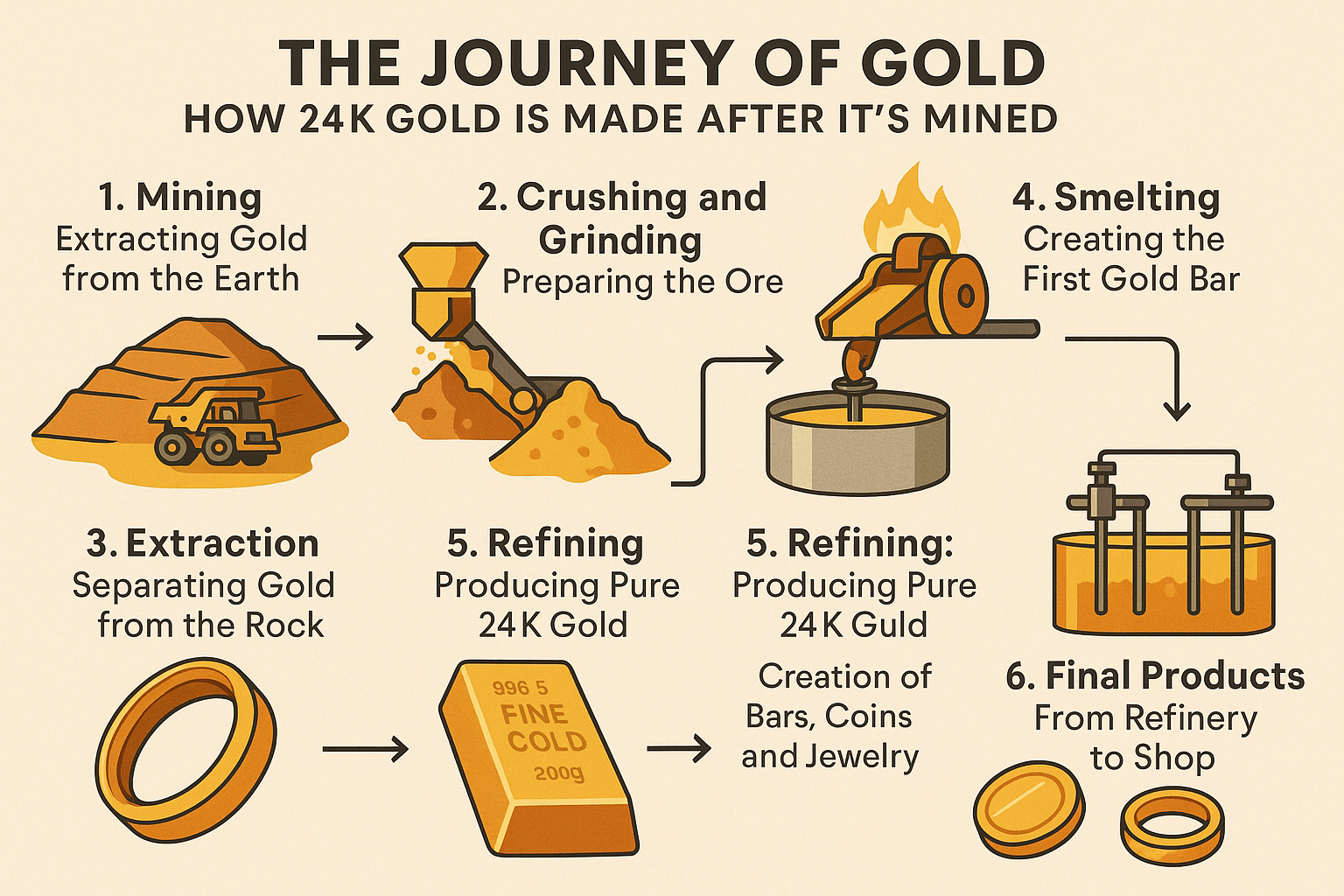
The Journey of Gold🟡: How 24K Gold is Made After It’s Mined

Gold is one of the most valued and admired metals on Earth — but how does it go from raw rock deep in the earth to the pure 24K gold you see in jewelry stores? The process is long, scientific, and fascinating. Let’s explore how gold is transformed after it’s mined.

⛏️ Mining: Extracting Gold from the Earth


The journey begins at gold-rich locations deep underground or along riverbeds. Gold is mined using several methods:

Open-pit mining – used for surface-level deposits

Underground mining – for deeper gold veins

Placer mining – involves panning or dredging riverbeds for loose gold particles

The result is gold ore – a mix of rock, dirt, and tiny particles of gold.


🪨 Crushing and Grinding: Preparing the Ore

The mined gold ore is transported to processing facilities, where it’s crushed and ground into a fine powder. This step increases the surface area, making it easier to extract gold from other materials.


🧪 Extraction: Separating Gold from the Rock

Next, the gold must be chemically separated from the other elements in the ore. Common extraction methods include:

Cyanidation – the most widely used technique, where cyanide solution dissolves the gold

Gravity separation – used when gold particles are large and heavy enough to separate by weight

Amalgamation – involves mixing gold with mercury to form an alloy (used less today due to environmental concerns)

This process results in a concentrated gold solution or a fine gold-rich mixture.


🔥 Smelting: Creating the First Gold Bar

The gold concentrate is heated at high temperatures in a furnace during a process called smelting. This melts the gold and helps remove impurities. What comes out is a rough, semi-pure gold bar called a doré bar, which is typically 80–90% gold.


⚗️ Refining: Producing Pure 24K Gold

To become the 99.9% pure gold (24K) we know, doré bars are sent for refining. There are two main methods:

Miller Process – uses chlorine gas to remove impurities quickly (results in 99.5% purity)

Wohlwill Process – an advanced method using electrolysis, which can achieve 99.99% purity

This step transforms the gold into investment-grade bars or high-purity material for luxury items.


🪙 Final Products: From Refinery to Shop

Now fully refined, the pure gold is ready to be used. It can be:

Cast into bars for investment or central bank reserves

Minted into coins

Alloyed and crafted into jewelry (for example, 22K or 18K gold)

Finally, these gold products are distributed to jewelry shops, banks, or gold dealers, where customers buy them for personal use, gifting, or investment.


✨ From Rock to Riches

Behind every 24K gold piece lies a powerful story — from the depths of the earth to the precision of science and craftsmanship. Whether in the form of a ring, necklace, or gold bar, every piece of gold has taken a long and remarkable journey to get to you.