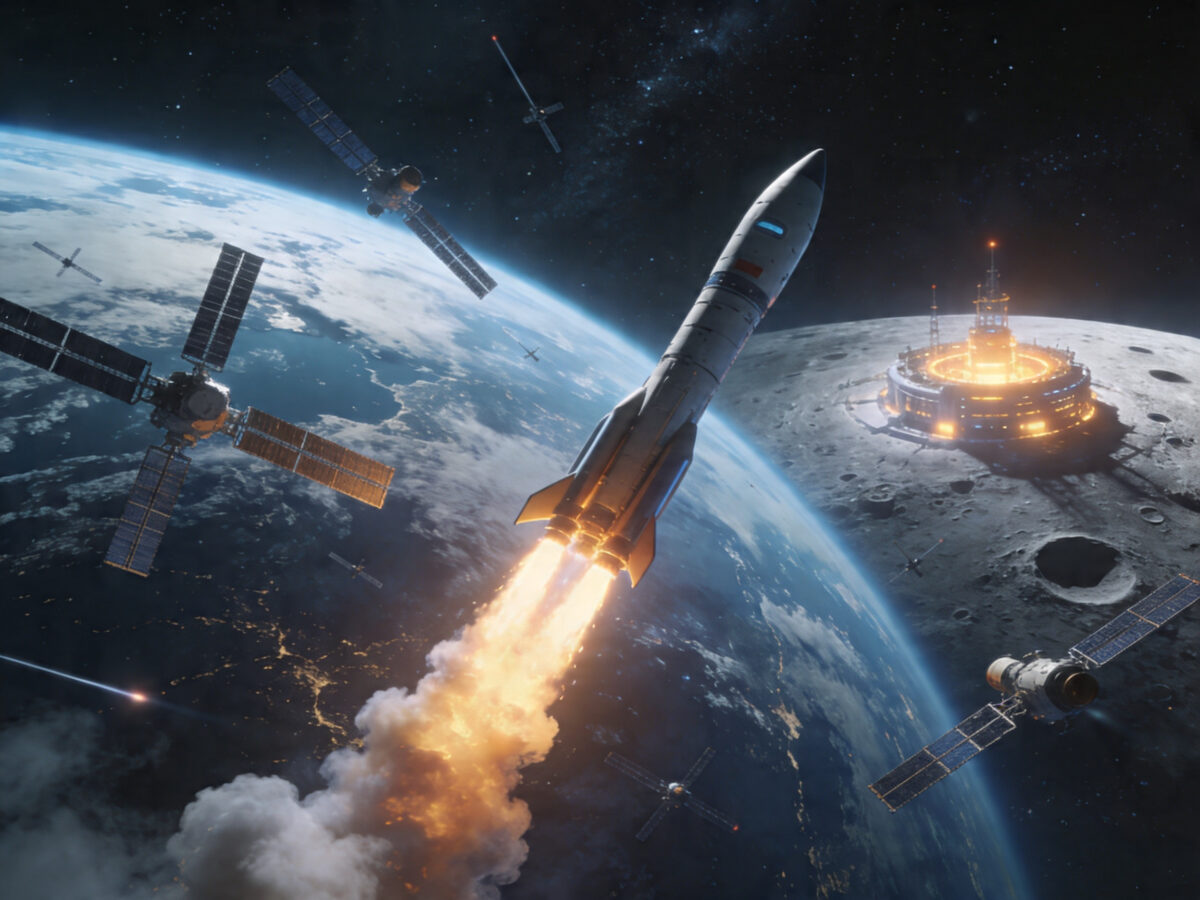
Space is no longer just the domain of government agencies and heroic astronauts—it’s becoming an extension of our economy, our technology stack, and even our daily lives. What we’re witnessing right now isn’t just “space exploration 2.0,” but a full-scale transformation of space into a competitive, commercial, and highly strategic frontier.
This shift is happening fast. Faster than most people realize.
From Prestige to Profit: Why Space Is Now a Business
For decades, space missions were driven by national pride. The Space Race was about proving dominance. Today, the motivations are very different.
Companies like SpaceX, Blue Origin, and Rocket Lab are building business models around:
- Satellite deployment
- Space-based internet
- Reusable rockets
- Future space tourism
- Lunar and asteroid resource extraction
The key idea is simple: space is no longer just exploration—it’s infrastructure.
Reusable rockets alone have reduced launch costs dramatically, turning what used to be billion-dollar missions into something startups can realistically participate in.
Satellites Are Quietly Running the World
If you think space doesn’t affect your daily life, think again.
Modern civilization depends heavily on satellites operated by organizations like NASA and ISRO.
They power:
- GPS navigation (every ride you book or map you open)
- Weather forecasting
- Disaster monitoring
- Global communications
- Financial systems synchronization
And now, satellite internet is becoming a serious disruptor. Constellations like Starlink are pushing toward global coverage, targeting remote regions where traditional infrastructure fails.
This is especially relevant for countries like India, where rural connectivity is still uneven.
“If you’re curious how this actually works behind the scenes, read our detailed guide on how satellite internet works.”
The Rise of AI in Space Missions
Artificial Intelligence is becoming the brain behind modern space systems.
Instead of relying solely on human commands from Earth, spacecraft are now being designed to:
- Make autonomous decisions
- Detect anomalies in real time
- Optimize fuel and trajectory
- Analyze planetary data instantly
For example, rovers on Mars can now decide which rocks are worth studying without waiting for instructions from Earth—a delay that can take up to 20 minutes.
This shift is crucial as missions move deeper into space. The farther we go, the more independence machines must have.
We’ve broken this down in depth in our article on AI in space and autonomous missions.
The Moon Is Back in Focus—and This Time It’s Strategic
The Moon is no longer just a symbolic destination. It’s becoming a strategic asset.
Programs like Artemis Program aim to establish a sustainable human presence on the Moon. But the real goal goes beyond exploration:
- Building lunar bases
- Using Moon resources (like water ice) for fuel
- Creating a launch point for Mars missions
Countries including the U.S., China, and India are actively planning lunar missions—not just to visit, but to stay.
India’s success with Chandrayaan-3 has already demonstrated how cost-efficient innovation can compete globally.
India’s space journey is worth exploring separately—especially ISRO’s unique approach.
Space Tourism: Luxury Today, Normal Tomorrow?
It may sound futuristic, but space tourism has already begun.
Private missions by companies like Virgin Galactic are offering suborbital flights to civilians. While tickets currently cost a fortune, the pattern is familiar:
- Early phase: expensive and exclusive
- Growth phase: more players enter
- Mature phase: prices drop, accessibility increases
Commercial aviation followed this exact trajectory.
Within the next 10–20 years, short space trips could become a premium travel experience rather than a billionaire-only fantasy.
The Dark Side: Space Debris and Regulation Challenges
With rapid growth comes serious risks.
Thousands of satellites are now orbiting Earth, and space debris is becoming a major threat. Even a tiny fragment traveling at high speed can destroy a spacecraft.
There’s also a regulatory gap:
- Who owns space resources?
- How do we prevent orbital congestion?
- What laws govern private companies in space?
Global frameworks are still catching up with technological progress.
Without proper regulation, space could become overcrowded—and dangerous.
The Next Frontier: Mars, Asteroids, and Beyond
Mars is still the ultimate long-term goal.
Companies like SpaceX are actively working toward making humans a “multi-planetary species.” While timelines are uncertain, the direction is clear.
Even more interesting is asteroid mining.
Asteroids contain rare metals like platinum and nickel in massive quantities. If extraction becomes viable, it could:
- Disrupt global commodity markets
- Reduce environmental damage from Earth-based mining
- Create entirely new industries
This isn’t science fiction anymore—it’s early-stage planning.
Why This Matters More Than You Think
Space is no longer separate from everyday life. It’s becoming deeply integrated with:
- Internet access
- Climate monitoring
- Defense systems
- Global communication
- Economic growth
The next decade will likely define how humanity expands beyond Earth—not just scientifically, but economically and socially.
For developers, entrepreneurs, and creators, this opens up entirely new opportunities:
- Space-tech startups
- Satellite data applications
- AI for space analytics
- Cross-industry innovation
Final Thought
We are living at a rare moment in history—similar to the early days of the internet.
Back then, only a few people understood its potential.
Today, space is at that same stage.
And just like the internet, those who understand it early won’t just witness the future—they’ll help build it.