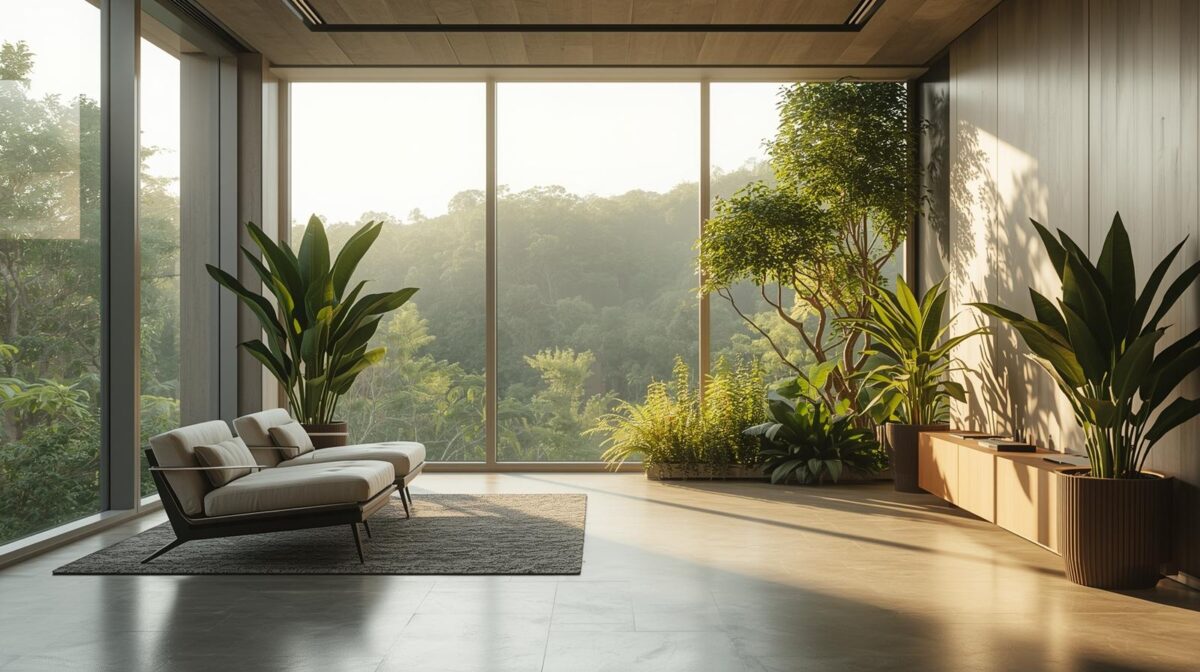
Nature Is Returning — Not Outside, But Inside
Technology once symbolized separation from nature.
Climate-controlled rooms. Artificial lighting. Digital immersion.
But across architecture, design, and urban policy, a quiet integration is taking place.
Biophilic design — the practice of incorporating natural elements into built environments — is no longer niche. Major corporations are redesigning campuses around open air, water features, and organic materials. Residential developments emphasize natural light, balconies, rooftop gardens, and shared green space.
Cities are expanding urban forests and green corridors not only for aesthetics but for temperature regulation and public health.
Even interior design trends reflect this shift. Indoor plant ownership has surged globally. Natural textures, earth tones, and sustainable materials dominate modern construction and renovation.
This is not decorative preference.
It is neurological alignment.
Environmental psychology research consistently shows that exposure to natural elements reduces cortisol levels, improves concentration, and enhances emotional regulation.
As screen time increases, biological counterbalance becomes essential.
Integration, Not Opposition
The future is not choosing between digital and natural.
It is blending them.
Smart homes coexist with solar integration. Urban density coexists with green rooftops. Remote work coexists with forest retreats.
The most advanced spaces of the coming decade will not look futuristic in the cold sense. They will feel grounded.
Conclusion
Nature is not retreating to the edges of society.
It is returning to the center.
And this reintegration signals something important: progress is becoming balanced.
If you want to revisit how cities are structurally adapting to this balance, return to:
👉 Episode 15 — Cities Are Quietly Reinventing Themselves
https://tortoisefeel.com/world-in-motion-episode-15
Because physical space and human well-being are no longer separate conversations.