Categories
Blog Social

Donald Trump’s 2025 Policy Decisions: A Global Overview

donald-trump

As President Donald Trump embarks on his second term, his administration has introduced several significant policies impacting both domestic affairs and international relations. This overview highlights key decisions made in 2025 and their broader implications.

1. Immigration Policy: Project Homecoming

In May 2025, President Trump announced “Project Homecoming,” a voluntary self-deportation program offering financial incentives and transportation assistance to undocumented immigrants who choose to leave the United States. The initiative also includes plans to expand the Immigration and Customs Enforcement (ICE) workforce by 20,000 officers, aiming to enhance immigration enforcement efforts. The Daily Beast

2. Executive Orders on Cultural and Geographic Renaming

President Trump signed Executive Order 14172, which reinstates the name “Mount McKinley” for Denali and renames the Gulf of Mexico to the “Gulf of America.” The order aims to honor American heritage through these renamings. Congress.gov+1The White House+1The White House+2Wikipedia+2Congress.gov+2

3. Trade Agreements: U.S.-UK Deal

The United States and the United Kingdom reached a trade agreement that reduces tariffs on UK-manufactured goods, including steel and automobiles, while expanding market access for U.S. agricultural products. The deal is designed to strengthen economic ties between the two nations. Business Insider

4. Foreign Policy: India-Pakistan Ceasefire Support

Following a ceasefire agreement between India and Pakistan, President Trump offered to increase trade with both nations and assist in facilitating discussions on long-standing issues, including the Kashmir conflict. The U.S. administration’s involvement underscores its commitment to promoting stability in the region. Reuters

5. Cultural Policy: Proposed Tariffs on Foreign Films

President Trump proposed a 100% tariff on foreign-produced films, aiming to bolster the domestic film industry. The proposal has sparked debate within the international film community, with concerns about potential impacts on global cultural exchange. AP News

6. Federal Workforce and Education Reforms

Aligning with the Project 2025 initiative, the Trump administration has implemented measures to reduce the size of the federal workforce and proposed significant changes to the Department of Education. These reforms include potential funding cuts and a shift towards increased state control over education policies.

Conclusion

President Trump’s policy decisions in 2025 reflect a focus on national sovereignty, economic restructuring, and cultural identity. These initiatives have elicited varied responses domestically and internationally, highlighting the complexities of governance in a globalized world.


Disclaimer

This article is intended for informational purposes only, summarizing recent policy developments based on publicly available sources. It does not constitute legal, political, or professional advice. Readers are encouraged to consult official government publications and reputable news outlets for comprehensive information.


Categories
Learning Personal Development Social

What I Learned After Taking a Break from Instagram for 30 Days

Break!

I didnโ€™t plan it. One day I just didnโ€™t feel like opening Instagramโ€”and then that day turned into a weekโ€ฆ and eventually, a month. What started as a random pause became one of the most eye-opening little experiments Iโ€™ve done on myself.

Hereโ€™s what changed in just 30 days off the โ€˜gram:


๐Ÿง  1. My Mind Feltโ€ฆ Quieter

No constant scroll. No subconscious comparisons. No noise. I didnโ€™t realize how much mental space those quick checks were taking up until they were gone.


โฑ 2. I Got Time Back

Those โ€œjust 5 minutesโ€ moments add up. I started filling that time with things Iโ€™d forgotten I lovedโ€”like reading, going on walks without my phone, or even just sitting still (wild, right?).


๐Ÿงโ€โ™‚๏ธ 3. I Felt More Present

Instead of snapping photos for Stories, I lived in the moment. A sunset was just a sunsetโ€”not content. And honestly? It felt more beautiful that way.


๐Ÿ’ญ 4. My Self-Worth Wasn’t Tied to Likes

I stopped measuring good days by how much engagement I got. Thatโ€™s a shift I didnโ€™t know I needed until I made it.


๐Ÿคณ Will I Go Back?

Yes, but differently. With limits. With purpose. Because now I know I donโ€™t need itโ€”I just like using it when I want to.


So, should you try it too?
If Instagram (or any app) feels more like a habit than a joyโ€”give yourself a break. Not forever. Just long enough to remember what life feels like without it.

Categories
Ask AI Tool Tech

5 AI Tools That Actually Save You Time (And Arenโ€™t Scary)

AI tools

Letโ€™s be realโ€”AI sounds like either a robot apocalypse or something only tech nerds care about. But the truth? There are actually useful AI tools that save time, boost productivity, and make life easierโ€”without feeling like you’re talking to Skynet.

Here are five that even your grandma (or your group chat) could get into:


โšก 1. ChatGPT โ€“ Your Brainโ€™s Backup

Need to write an email, brainstorm a birthday message, or summarize a meeting? Just type a prompt and it does the thinking with you. It’s like a helpful coworker who never sleeps (or eats your snacks).

๐Ÿ’ก Try: โ€œSummarize this 10-page doc in 3 bullet points.โ€


โœ๏ธ 2. Grammarly โ€“ Your Writing Wingman

Whether you’re sending a professional email or updating your LinkedIn, Grammarly catches typos, fixes grammar, and even helps you sound smarter (and nicer).

๐Ÿ’ก Bonus: It works across Chrome, Gmail, and Google Docs. Magic.


๐Ÿ“… 3. Motion โ€“ The Calendar That Plans for You

Motion combines your to-dos and meetings and automatically schedules your day. It shifts things when new tasks come inโ€”perfect for busy bees who hate time-blocking.

๐Ÿง  Like Google Calendarโ€ฆ but with a brain.


๐ŸŽจ 4. Canva Magic Studio โ€“ Design Without a Designer

Want a logo, a social post, or a clean presentation? Canvaโ€™s AI can now generate visuals, layouts, and even write captions. No design degree required.

๐ŸŽฏ Good for: Solopreneurs, students, content creators.


๐Ÿ”Š 5. ElevenLabs or Descript โ€“ Turn Text into Voice (or Vice Versa)

Create voiceovers, transcribe podcasts, or edit audio like you’re cutting a Word doc. These tools are surprisingly accurate and oddly fun.

๐ŸŽ™๏ธ Imagine changing a sentence in your video by just typing it.


โœ… Final Thought

AI isnโ€™t here to steal your job. Itโ€™s here to handle the boring parts so you can focus on the cool stuff. You donโ€™t need to be a tech geniusโ€”just curious enough to give it a shot.

Try one. You might just buy yourself back an hour a day.

Categories
Personal Development Social

Summer Learning Ideas

Summer vacation is a great time for kids to explore, have fun, and learn new things in a more relaxed environment. Hereโ€™s a mix of fun, educational, and skill-building ideas that children can learn during their summer break:


๐ŸŽจ Creative & Artistic Skills

  • Drawing & Painting โ€“ Explore different mediums like watercolor, crayons, or digital art.
  • Crafts & DIY Projects โ€“ Origami, jewelry making, clay modeling, or recycling crafts.
  • Photography โ€“ Teach basics using a phone or camera and go on photo walks.
  • Story Writing or Comic Making โ€“ Spark imagination and improve writing skills.

๐Ÿง  Academic Enrichment

  • Reading Challenges โ€“ Read a set number of books over the summer.
  • Math Games & Puzzles โ€“ Use apps or books for fun math-based activities.
  • Science Experiments at Home โ€“ Simple experiments with kitchen items.
  • Learning a New Language โ€“ Duolingo or fun flashcards to learn basic words.

๐Ÿ’ป Tech & Digital Skills

  • Coding for Kids โ€“ Platforms like Scratch, Tynker, or Code.org.
  • Typing Practice โ€“ Learn proper typing skills with fun games.
  • Video Editing or Animation โ€“ Create short videos or stop-motion animations.
  • Building Websites โ€“ Simple HTML/CSS for older children.

๐Ÿƒโ€โ™€๏ธ Physical Activities

  • Swimming Lessons
  • Yoga or Dance Classes
  • Biking, Skating, or Hiking
  • Martial Arts or Self-Defense Classes

๐ŸŒฑ Life & Soft Skills

  • Basic Cooking or Baking
  • Gardening and Plant Care
  • Money Management with Pocket Money
  • Time Management or Journaling

๐ŸŽญ Performing Arts

  • Acting or Drama Workshops
  • Music Lessons (Piano, Guitar, Singing, etc.)
  • Puppet Shows or Role Play Games

๐ŸŒ Exploring the World

  • Visit Museums, Zoos, or Science Centers
  • Learn about a New Country Each Week
  • Nature Walks and Bug Hunting
  • Camping or Star Gazing

Download our free Summer Vacation Weekly Planner Chart

tortoisefeel-Summer-Vacation-Weekly-Planner-Chart
Categories
Ask AI Tool Tech

Understanding How ChatGPT Works (ML/AI learning path)

Goal: Understand transformers, large language models, and the architecture behind ChatGPT.

Tutorial Suggestions:

  • โœ… โ€œTransformers from Scratchโ€ (Blog/Code by Peter Bloem or Jay Alammar)
  • โœ… YouTube:
    • โ€œHow GPT Works โ€“ Visual Explanationโ€
    • โ€œAttention is All You Need Explainedโ€
  • โœ… Courses:
Categories
Ask AI Tool Blog Tech

Using ChatGPT API (for developers)

Goal: Build apps or tools with ChatGPT or GPT-4 API.

Tutorial Suggestions:

Categories
Ask AI Tool Tech

Using ChatGPT Effectively (for general users or productivity)

Goal: Learn how to prompt better, write content, brainstorm, code, etc.

Tutorial Suggestions:

Categories
Blog Learning

The Ultimate Guide to Effective Meetings

In todayโ€™s fast-paced work environment, meetings are essential but can often feel unproductive. However, by applying a few key principles, you can transform your meetings into powerful tools for collaboration and decision-making.

In this guide, Iโ€™ll share the most effective strategies for running meetings that drive results, highlighting key lessons we can learn from Chris Donnellyโ€™s Ultimate Meeting Cheat Sheet, which you can explore below.

1. Bezos’ 3 Golden Rules for Meetings

Jeff Bezos’ meeting strategies provide valuable lessons for keeping meetings small, effective, and focused. These rules can dramatically improve how your team collaborates:

  • The Two-Pizza Rule: Keep your meeting size small enough that two pizzas could feed everyone. This ensures discussions stay focused.
  • Ditch the PowerPoint: Instead of using slides, embrace detailed narrative memos. Written thoughts encourage deeper understanding and meaningful conversation.
  • Embrace Silence: Begin with a 30-minute silent reading session of the memo, allowing participants to fully absorb information before discussion.

2. 6 Best Practices to Elevate Your Meetings

To ensure your meetings are as productive as possible, consider adopting these best practices:

  1. Define a Clear Purpose and Agenda: Always know the goal of the meeting and share the agenda with attendees ahead of time.
  2. Encourage Active Participation: Create an environment where everyone feels comfortable contributing.
  3. Empower a Skilled Meeting Leader: A good leader keeps the discussion on track and ensures objectives are met.
  4. Conclude with Action Items: Summarize the key takeaways and assign clear next steps.
  5. Explore Alternatives: Not all collaboration needs to happen in meetingsโ€”consider alternatives like collaborative documents or asynchronous discussions.
  6. Seek Feedback and Improve: Regularly assess your meetings and seek ways to enhance them over time.

3. Proven Tips to Reduce the Number of Meetings

Cutting down on unnecessary meetings allows for more focused, uninterrupted work time. Here are three proven ways to reduce your meeting load:

  • No Meeting Days: Establish specific days where no meetings are allowed, giving your team time to focus.
  • Ruthlessly Audit Your Calendar: If a meeting lacks a clear purpose, cancel it. Time is better spent on high-impact tasks.
  • Leverage Asynchronous Tools: Use tools like email, shared documents, or video recordings to collaborate without needing to schedule a meeting.

4. Meeting Hacks from Industry Leaders

Some of the most successful business leaders have unique meeting strategies that you can easily incorporate:

  • Steve Jobs’ Walking Meetings: Break formalities and spark creativity by conducting meetings while walking.
  • Richard Branson’s Stand-up Rule: Short, energetic meetings happen when everyone is standing.
  • Warren Buffetโ€™s 5-Minute Rule: If you canโ€™t cover an agenda topic in 5 minutes, schedule another meeting.
  • Elon Muskโ€™s 80/20 Rule: Only invite participants who will contribute 80% of the value in the meeting.

5. Leverage Tech Tools to Improve Meetings

You can streamline your meetings and improve efficiency by integrating technology. Here are a few tools that Chris Donnelly recommends:

  • Otter.ai: Real-time transcription for capturing conversations while staying engaged.
  • Loom: Record your screen, voice, and face to share video updates for asynchronous collaboration.
  • Tactiq: Generate meeting agendas automatically and export them to various tools like Notion or ClickUp.
  • Canva GPT: Easily design visuals to support your meetings, including presentations and diagrams.

Chris Donnellyโ€™s Meeting Cheat Sheet

Below is Chris Donnellyโ€™s Ultimate Meeting Cheat Sheet, which highlights key strategies and tools for running effective meetings. Download the full high-resolution version from his newsletter here.

Chris Donnelly – How to Have Effective Team Meetings Cheat Sheet Guide

Happy Learning & Thanks for visiting!

Categories
Blog Learning

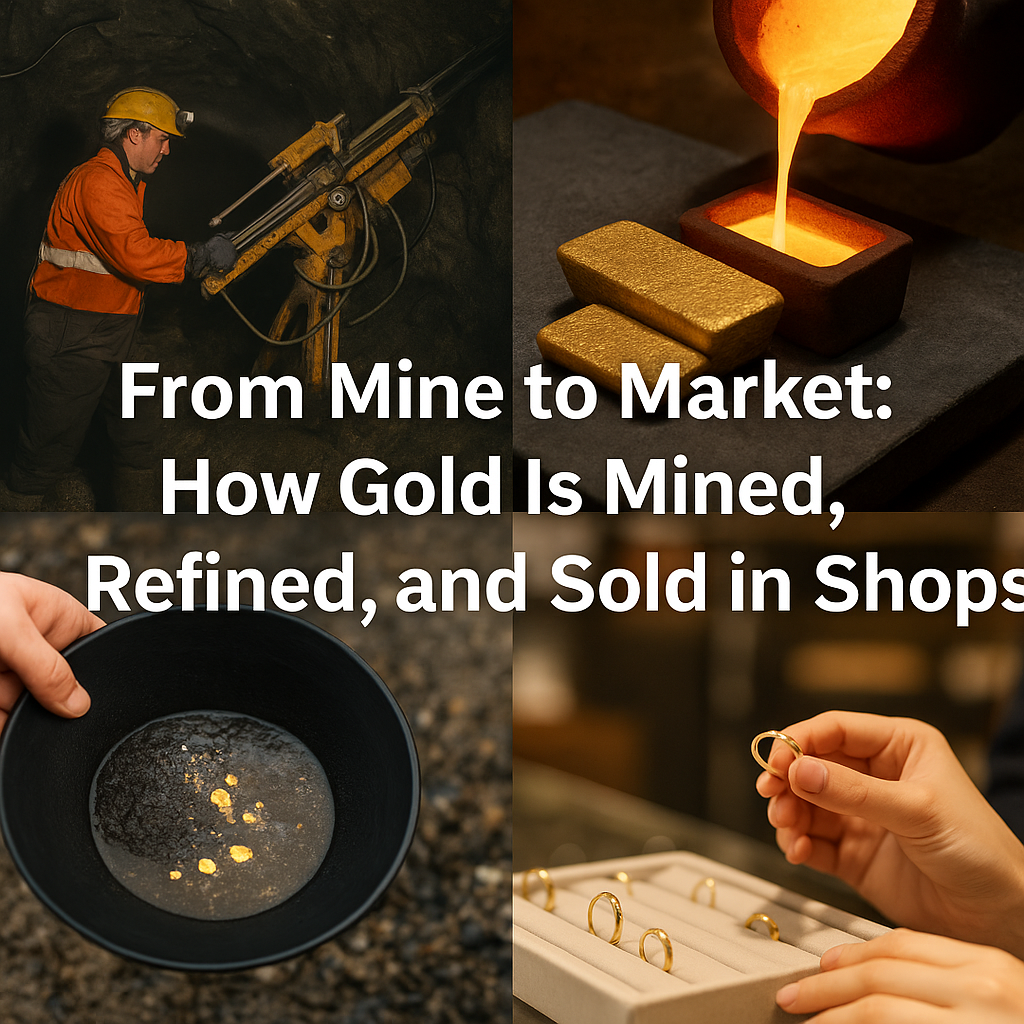
From Mine to Market: How Gold Is Mined, Refined, and Sold in Shops

Gold is one of the most coveted precious metals in the world, adored for its beauty, rarity, and utility. But how does it travel from deep within the earth to glittering display cases in shops? In this article, weโ€™ll explore the entire process of gold mining, refining, and its journey into the retail market.

1. Gold Mining: Extracting Gold from the Earth

Gold is mined from different parts of the world through two primary methods: placer mining and hard rock mining.

  • Placer Mining:
    • Placer mining involves extracting gold from alluvial deposits, where gold has been naturally deposited in rivers and streams over time.
    • Miners use techniques like panning, sluicing, or dredging to separate gold from sediment.
    • This method is often used in regions with significant water flow and is one of the oldest methods of gold extraction, dating back thousands of years.
  • Hard Rock Mining:
    • In hard rock mining, gold is found deep underground, often in quartz veins.
    • Miners dig shafts or tunnels to access these veins, blasting and drilling the rock to extract ore containing gold.
    • The ore is then transported to a mill, where it undergoes various processes to extract the gold.

Mining operations can occur on a small scale using artisanal methods or on a large industrial scale with heavy machinery and advanced technology.

For a detailed exploration of gold extraction methods, read our article on Unearthing Gold: A Deep Dive into Placer and Hard Rock Mining.

2. Ore Processing and Extraction: Separating Gold from the Rock

Once gold-bearing ore is brought to the surface, the next step is to separate the gold from the surrounding materials. This is achieved through several processing methods:

  • Crushing and Grinding:
    • The ore is crushed into smaller pieces to break down the rock and expose the gold within.
    • It is then ground into a fine powder to facilitate further separation.
  • Concentration:
    • Methods like gravity concentration, froth flotation, and leaching are used to concentrate the gold particles.
    • Gravity concentration takes advantage of the high density of gold, separating it from lighter minerals using water and gravity.
    • In leaching, chemicals like cyanide or mercury are used to dissolve gold from the ore, though these methods pose significant environmental risks.
  • Amalgamation:
    • In some cases, gold is amalgamated with mercury to form an alloy, which is then heated to evaporate the mercury, leaving behind pure gold.
    • However, due to the toxic nature of mercury, this method is being phased out in favor of more sustainable practices.

3. Smelting and Refining: Purifying Gold

Once the gold has been extracted, it must be purified to reach the high standards expected by buyers and investors. This process is known as smelting and refining:

  • Smelting:
    • The concentrated gold is heated to high temperatures in a furnace, where it melts, separating from impurities.
    • During this process, additives like fluxes are used to remove impurities, leaving a molten pool of gold.
    • The molten gold is then poured into molds to form gold bars known as dorรฉ bars, which contain a mix of gold and other metals like silver or copper.
  • Refining:
    • To achieve high levels of purity (typically 99.5% or higher), the dorรฉ bars undergo refining. The most common methods are:
      • Electrolytic Refining: Involves dissolving gold in a solution and using electricity to separate pure gold from impurities.
      • Aqua Regia Process: Gold is dissolved in a mixture of nitric and hydrochloric acid, and then precipitated to produce pure gold.
    • Refined gold is then molded into bars, coins, or other forms before being sent to the market.

Discover the intricate processes of gold purification in our article Refining Gold: From Dorรฉ Bars to Pure Bullion.

4. Transporting Gold: From Refineries to Market

Once gold has been refined, itโ€™s ready to be transported to markets. Gold moves through different channels depending on its intended purpose:

  • Gold Bullion:
    • Refined gold is often cast into gold bars or bullion and is sold on commodities markets.
    • This gold is purchased by central banks, financial institutions, and investors looking for a stable asset.
  • Jewelry Industry:
    • A significant portion of gold is sold to jewelry manufacturers, where it is crafted into various pieces like rings, necklaces, and bracelets.
    • Jewelry makers may alloy the gold with other metals like silver or copper to create different grades, such as 18K or 14K, and achieve varying colors, including white, rose, and yellow gold.
  • Technology Sector:
    • Gold is also used in the electronics industry due to its excellent conductivity and resistance to tarnish. It is used in small quantities in smartphones, computers, and medical devices.

5. Selling Gold in Shops: Reaching the Consumer Market

Once gold has been crafted into its final formโ€”whether as bullion, coins, or jewelryโ€”it is ready to be sold to consumers. The journey continues:

  • Retail Gold Jewelry Shops:
    • Jewelers purchase gold from wholesalers or directly from refiners, often in the form of gold sheets, wires, or pre-cast forms, which they shape into beautiful pieces.
    • The finished jewelry is then displayed in retail stores or sold online.
  • Gold Bullion Dealers:
    • Bullion dealers sell gold bars and coins to investors. These dealers work closely with mints, central banks, and refiners to ensure the gold they sell is of certified purity.
  • Pawnshops and Secondary Markets:
    • In addition to traditional retail outlets, gold is often sold in secondary markets like pawnshops, where individuals sell gold jewelry, coins, or bars.

6. Regulations and Ethical Concerns: Ensuring Responsible Sourcing

In recent years, ethical concerns around gold mining, particularly regarding human rights abuses and environmental damage, have led to increased scrutiny and regulations. Many retailers now commit to selling ethically sourced or fair trade gold, which ensures that the gold was mined under fair labor conditions and without significant harm to the environment.

Certifications like the Fairmined and Fairtrade Gold labels help consumers make informed choices when purchasing gold.

Learn more about ethical gold sourcing in our article Ethical Gold: Navigating Responsible Sourcing and Certifications.

For more details on gold mining and responsible sourcing, visit the World Gold Council and the Fairmined Gold Certification websites.

7. Conclusion: The Journey of Gold from Earth to Market

The process of mining, refining, and selling gold is a complex and fascinating one. From its humble origins in the earth to the sophisticated refining and crafting processes, every step requires expertise, technology, and dedication. For thousands of years, gold has been cherished by humans, and it continues to be an integral part of our economies, cultures, and personal lives.

As consumers, itโ€™s easy to be captivated by the beauty of gold, but understanding the journey it takesโ€”from mine to marketโ€”adds a new layer of appreciation for this extraordinary metal.

Further Reading:

#GoldMining #GoldRefining #GoldJewelry #GoldMarket #EthicalGold #GoldProduction #MineToMarket #SustainableGold #PreciousMetals #GoldIndustry

Categories
Blog

The Historical Journey of Gold: From Ancient Civilizations to Modern Times

Gold, the shimmering metal synonymous with wealth, power, and beauty, has been deeply intertwined with human history for thousands of years. From ancient civilizations worshipping it as a divine substance to modern economies building reserves to hedge against uncertainty, gold’s story is rich and fascinating. Letโ€™s embark on a journey through time to explore the pivotal role gold has played in shaping societies and economies across the ages.

Gold in Ancient Civilizations: A Divine Substance

Long before gold became a currency or an investment, it was revered for its beauty and permanence. In ancient Egypt, gold was believed to be the flesh of the gods, especially the sun god Ra. The ancient Egyptians adorned their tombs, temples, and even their pharaohs in gold, showcasing their connection to the divine. The famous mask of Tutankhamun, made of solid gold, remains a testament to how deeply ingrained this precious metal was in their culture.

Gold in ancient civilization – source freepik.com

Around the same time, civilizations in Mesopotamia and the Indus Valley also began to use gold for creating intricate jewelry and religious artifacts. Gold was not just a symbol of wealth but a representation of the eternal and the sacred.

Classical Antiquity: Gold as Power and Wealth

As civilizations evolved, so did the significance of gold. By the time of the Greeks and Romans, gold had become more than just a symbol of the divine; it was a tool of power. Roman emperors controlled vast reserves of gold, and gold coins became a central part of trade and wealth accumulation.

Middle Ages Gold – source freepik.com

In ancient Greece, gold was associated with the gods and heroes of mythology. The legendary Golden Fleece, sought after by Jason and the Argonauts, was a symbol of kingship and authority. This period also marked the rise of gold as a medium of exchange, establishing its importance in the global economy.

The Middle Ages: Gold, Trade, and the Rise of Banking

During the Middle Ages, gold became the backbone of the burgeoning global trade network. As trade routes expanded from Europe to Asia and Africa, gold flowed across continents, linking distant lands through commerce. The Islamic Caliphates, Byzantine Empire, and kingdoms of Africa were all deeply involved in gold production and trade, with gold often being traded for spices, silk, and other valuable goods.

It was during this era that gold became a foundation for banking, as merchants and rulers sought to store and transport wealth securely. The emergence of goldsmith bankers laid the groundwork for modern banking systems.

The Age of Exploration and the Gold Rushes

The discovery of the New World in the late 15th century led to an unprecedented thirst for gold. The Spanish conquistadors, driven by tales of cities of gold, plundered the Americas, leading to the extraction of vast quantities of gold from the Aztec and Inca empires. This influx of gold into Europe significantly altered the continentโ€™s economy, marking the beginning of global capitalism.

Gold Rushes and age exploration – AI Generated – Source freepik.com

The 19th century witnessed gold rushes in California, Australia, and South Africa, drawing hundreds of thousands of people in search of fortune. These events not only shaped the settlement of new territories but also laid the foundations for modern cities and industries.

Gold in the Modern Era: From the Gold Standard to Today

As the global economy developed, nations adopted the gold standard in the 19th century, where currencies were directly tied to the value of gold. This system remained in place until the 20th century, when the complexities of modern economies made the gold standard obsolete. However, gold has never lost its allure or value.

Gold in Modern Era – AI Generated – source freepik.com

Today, central banks still hold large reserves of gold as a hedge against economic uncertainty, and gold remains a popular investment for individuals. The metal has also found new applications in technology, healthcare, and even space exploration, proving that its utility continues to evolve.

The Cultural Legacy of Gold

Beyond economics, gold has maintained its cultural significance. From the intricate gold jewelry worn in Indian weddings to the Olympic gold medal awarded to the worldโ€™s greatest athletes, gold remains a universal symbol of achievement, prestige, and beauty.

Culture Legacy of Gold – AI Generated – Image source – freepik.com

Conclusion: The Timeless Appeal of Gold

From the temples of ancient Egypt to the vaults of modern central banks, gold’s allure has remained constant throughout the millennia. Its timeless beauty, scarcity, and resistance to decay make it unique among metals, but its role in human history goes far beyond its physical properties. Gold is a symbol of power, wealth, and achievementโ€”one that continues to captivate and inspire humanity.

As we move further into the digital age, with cryptocurrencies and artificial intelligence reshaping our economies and lives, gold’s legacy remains unchallenged. It is not just a metal but a testament to human ambition, perseverance, and creativity.