❓ User Question:
“I am on a shared host using cPanel. Can I develop a hybrid application using Python and MongoDB? Or what is the recommended database and coding language?”
✅ Expert Answer:
If you’re on a shared hosting plan with cPanel, there are certain limitations that will shape what kind of stack you can use — especially for hybrid applications (like mobile/web apps built using React Native, Capacitor, or Flutter Web).
⚙️ Can You Use Python & MongoDB on Shared Hosting?
✅ Python Support (Limited)
- Most shared hosts offer limited Python support, often via CGI or Passenger.
- Long-running apps like Flask or FastAPI may not be supported unless your host offers it specifically (some do via Passenger or SSH access).
❌ MongoDB Support (Nope)
- MongoDB is not supported on most shared hosting plans.
- Shared hosting is built around MySQL or MariaDB, and does not allow custom server processes like MongoDB.
- You can use MongoDB Atlas as a cloud database, but you’d still need a proper backend server to connect to it.
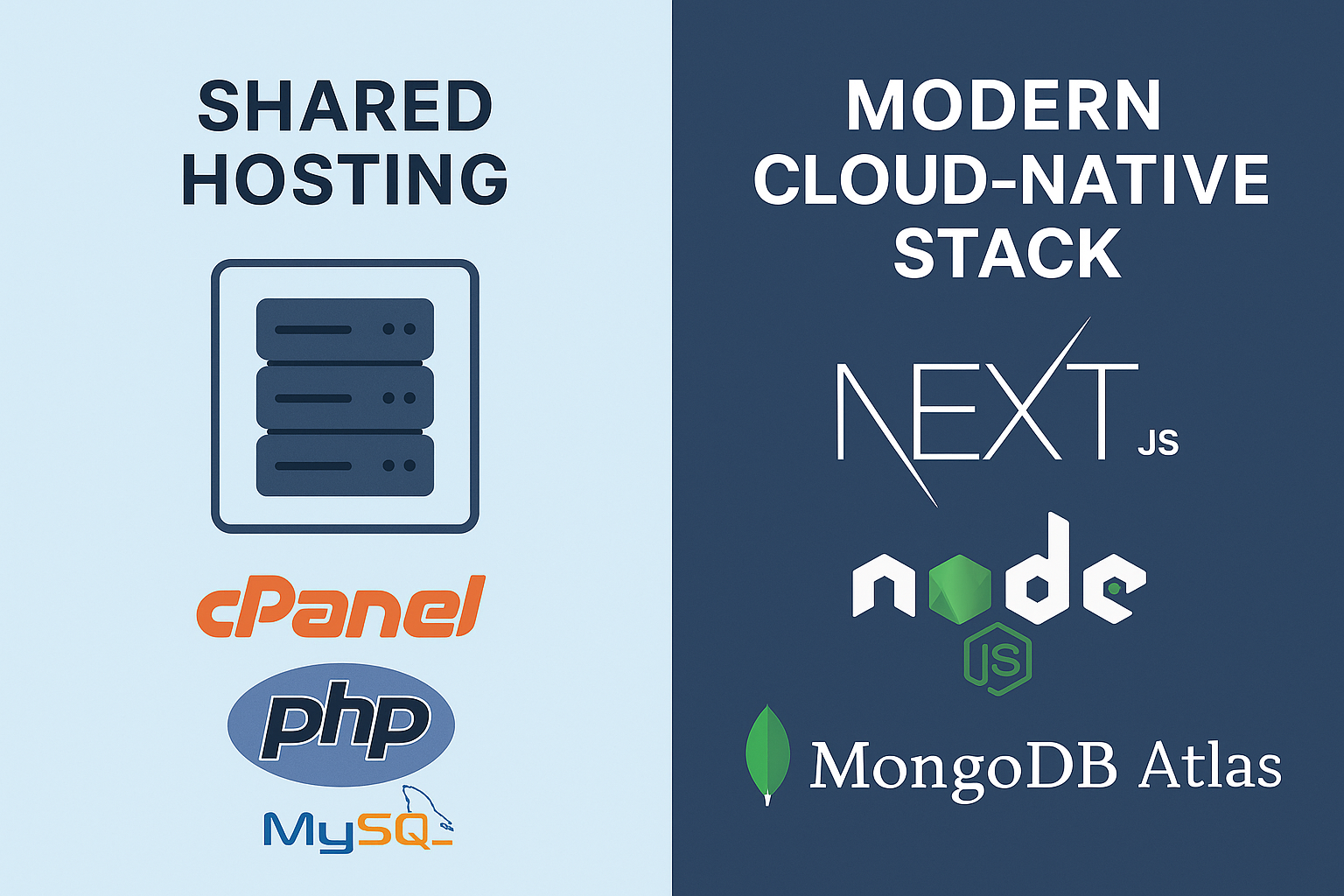
✅ So What Stack is Recommended on Shared Hosting?
| Tech Layer | Recommended on Shared Hosting |
|---|---|
| Frontend | React (static build), HTML/CSS/JS |
| Backend | PHP (Laravel or Vanilla), maybe Python if supported |
| Database | MySQL or MariaDB |
| Hybrid App API | Build REST API in PHP or limited Python |
| Hosting | Use cPanel to manage files, cron jobs, and MySQL |
Conclusion: Use PHP + MySQL for backend API if you’re sticking to shared hosting.
🌍 What’s the Recommended Dev Stack in 2025?
If you’re not restricted to shared hosting and want a future-ready stack for professional, scalable development, here’s what we recommend:
🔧 Frontend
- Next.js (React) + Tailwind CSS + TypeScript
- Alternatives: SvelteKit, Vite + React, Astro
- For mobile: React Native, Expo, Capacitor (hybrid app framework)
⚙️ Backend
- Node.js + Express / Fastify
- NestJS (if you prefer structure and TypeScript)
- Python (FastAPI) – Best for data-heavy apps or AI
- Laravel (PHP) – Rapid development for traditional apps
- Go or Rust – For performance-heavy systems
🗃️ Database
| Type | Recommended |
|---|---|
| Relational | PostgreSQL (modern), MySQL |
| NoSQL | MongoDB Atlas (external), Firestore (for real-time), Redis (cache) |
🚀 Hosting & Deployment Options
| Platform | Use Case |
|---|---|
| Vercel | Best for frontend (Next.js) |
| Render / Railway | Full-stack hosting with DB |
| Firebase / Supabase | All-in-one backend, auth, DB |
| DigitalOcean / Hetzner VPS | Full control + Docker setup |
| MongoDB Atlas | Fully-managed MongoDB, free tier available |
📌 Summary
| Goal | Recommended Action |
|---|---|
| Use Python + MongoDB on shared hosting | ❌ Not feasible |
| Stick to shared hosting | ✅ Use PHP + MySQL |
| Want modern, scalable stack | ✅ Use Node.js, Python, or Laravel + cloud DB |
| Build hybrid mobile app | ✅ Backend API (Node/PHP) + React Native or Capacitor |
✨ Final Thought
If you’re starting small, shared hosting is a great launch pad. But for serious hybrid or full-stack app development in 2025, modern cloud platforms offer better flexibility, tooling, and scalability.
🧠 Need Help Choosing the Right Stack?
Comment below or contact us — we can help you decide the best stack based on your goals, skill level, and resources.
📌 Tags: